
Let’s watch one of the most significant vertical integrations in sports betting history unfold. Fanatics CEO Michael Rubin just announced that the sports betting operator will launch Fanatics Predicts – a full prediction market product – in partnership with Crypto.com, with rollout expected before the end of 2025.
This move positions Fanatics to compete directly with event contract prediction platforms like Kalshi and Polymarket, while leveraging an advantage those competitors simply don’t possess: a massive existing customer base that already bets on a range of sports.
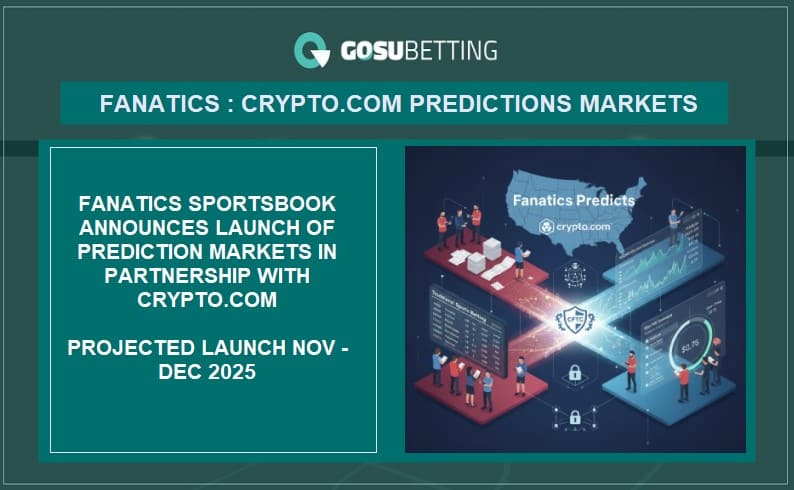
Why You Should Care: The Strategic Shift That’s Reshaping Sports Betting
When you examine the announcement Michael Rubin made on CNBC Money Movers (November 20, 2025), you’re observing something more profound than just another product launch. You’re witnessing the sportsbook incumbents – the companies with regulatory licenses, compliance infrastructure, and customer relationships – suddenly pivoting toward a market that pure-play prediction platforms have been building in isolation for years. This represents a fundamental competitive realignment in how you’ll access event contracts betting on sports.
Consider your current options: You can trade event contracts on dedicated prediction exchanges like Kalshi, where you’re betting peer-to-peer against other traders. Or you can visit traditional crypto sportsbooks where you wager against the house on fixed odds. Fanatics Predicts will occupy a hybrid position – combining the peer-to-peer market structure of prediction platforms with the operational sophistication and customer-facing expertise of a regular sportsbook. For you as a bettor, this creates a new competitive dynamic you haven’t encountered before.
Fanatics’ Competitive Positioning: Why Sportsbook Incumbents Win at Vertical Integration
The Existing Customer Ecosystem Advantage
You need to understand the asymmetric advantage that established sportsbook operators like Fanatics hold over pure-play prediction markets. Fanatics currently operates in 23 U.S. states, meaning it has acquired, verified, and built relationships with millions of sports bettors.
Those betting customers already trust Fanatics with their deposits, wagers, and account information. That existing customer base becomes the foundation for a prediction market launch that promises exceptional market liquidity – it’s not starting from zero and acquiring users; it’s offering an adjacent product to people who already know the brand.
When Rubin articulated his strategic philosophy on CNBC, he crystallized this advantage: “If there is a business that is important to our customers, we want to be in there and do it better.” This approach isn’t abstract strategy and translates directly into user acquisition economics. For event contracts competitors like Kalshi and Polymarket, customer acquisition costs remain steep. For Fanatics, you’re extending the value proposition to an installed base that’s already paying for the processing of financial transactions.
Strategic Reality Check: You’re observing what Rubin explicitly acknowledged: Fanatics believes traditional sportsbooks entering prediction markets hold “considerable strategic advantages” over dedicated prediction market operators due to “expansive customer ecosystems, accumulated experience, and ability to integrate new offerings at scale.” This competitive positioning will shape event contracts market dynamics for the next 24-36 months.
The Regulatory Licensing Infrastructure Advantage
When you understand how Fanatics gained prediction market entry capacity, you see another layer of incumbent advantage. The company acquired a controlling stake in Paragon Global Markets, an NFA-approved introducing broker that’s been operating with Futures Commission Merchant (FCM) status since 2014. This acquisition – revealed through National Futures Association filings showing Fanatics as a 10%+ stakeholder in Paragon – means you’re operating legally under an established regulatory framework that would take pure-play startups months or years to navigate.
Compare this to competitors’ timelines: DraftKings had to acquire the federally regulated Railbird Exchange outright in October 2025. FanDuel partnered with the CME Group, a designated contract market with decades of derivatives trading infrastructure. Fanatics took a more surgical approach by avoiding building or acquiring an entire exchange; the sportsbook acquired regulatory standing through a stake in an existing NFA-registered broker. This means it entered the prediction market space with compliance foundations already in place.
Regulatory Mechanics: The partnership with Crypto.com operates as a designated contract market (DCM) under Commodity Futures Trading Commission (CFTC) oversight. Crypto.com provides the technical infrastructure for trading event contracts; Fanatics operates as the customer-facing interface through NFA-registered FCM status via Morton Street Trading (the NFA application vehicle). This division of labor is crucial. Crypto.com handles the core matching and settlement; Fanatics handles customer acquisition and covers compliance requirements for licensed jurisdictions.
The Fanatics – Crypto.com Partnership: How Technology Infrastructure Enables Market Entry
What the Partnership Architecture Actually Means
You should understand the partnership model because it defines what Fanatics Predicts will actually be. Crypto.com isn’t being rebranded as a Fanatics product – it’s integrating Crypto.com’s sports event futures contracts platform as the backend infrastructure. This is the technology services provider model, identical to how Underdog Sports entered prediction markets through a similar Crypto.com partnership in September 2025.
What this means for you as a potential user: When you place a prediction market wager on Fanatics Predicts, the actual contract matching, pricing, and settlement happens on Crypto.com’s CFTC-regulated infrastructure. Fanatics provides the customer interface, account management, and regulatory compliance for your licensed states. Crypto.com provides the orderbook, liquidity management, and derivatives settlement mechanics.
This division of responsibilities is often referred to as an FCM-DCM model, and is becoming the standard architecture for incumbent sportsbooks entering prediction markets.
How Fanatics-Crypto.com Compares to Competitors
Clearly, even with these advantages, other operators form considerable competition:
- DraftKings approach: Acquired Railbird Exchange (CFTC-regulated) outright; operates its own designated contract market infrastructure. Advantage: Complete control. Disadvantage: Massive capex and operational burden.
- FanDuel approach: Partnered with CME Group (CFTC-regulated); CME provides a designated contract market. Advantage: Leverages CME’s 50-year derivatives exchange infrastructure. Disadvantage: Less control over platform customization.
- Fanatics approach: Partnership with Crypto.com (CFTC-regulated DCM); Fanatics operates as an NFA-registered FCM via Paragon Global Markets stake. Advantage: Regulatory standing without greenfield infrastructure build. Disadvantage: Dependency on Crypto.com’s platform capabilities.
The Regulatory Landscape: Federal Authority, State-Level Conflict, and What It Means for Your Contracts Betting Access
Understanding CFTC Oversight vs. State Gaming Regulation
As a bettor, you’re navigating a critical regulatory ambiguity that makes Fanatics’ timing both opportune and risky. Prediction markets operate under Commodity Futures Trading Commission oversight as derivatives products, not under state gaming regulation. This federal-vs.-state tension is the core strategic gamble Fanatics is making.
Here’s the regulatory reality: The CFTC has allowed prediction market platforms to self-certify sports event contracts through a streamlined process without explicit agency approval. Platforms like Kalshi and Polymarket operate by filing contracts with the CFTC and proceeding unless the agency objects within a specific window. You’re watching Fanatics leverage this same federal framework, arguing that commodities derivatives regulation supersedes state gaming restrictions.
But here’s where state-level friction enters: Maryland’s gaming regulator just warned licensees that participation in sports event contracts, including those offered outside state borders, could jeopardize their gaming licenses. Similar warnings have emerged from Nevada and other states. This creates the regulatory arbitrage Fanatics must navigate: The prediction markets product operates legally under federal CFTC authority, yet the existing sportsbook licenses exist under state gaming authority which views prediction markets with suspicion.
Legal experts like gaming attorney Daniel Wallach have criticized the CFTC’s passive stance as regulatory capture – allowing platforms to self-certify without explicit policy guidance. Wallach suggests this issue could ultimately reach the U.S. Supreme Court. For you, this means Fanatics’ prediction market offering exists in a legal gray zone that could shift dramatically with regulatory action or court precedent.
How State-Level Restrictions Affect Your Access
You should expect Fanatics Predicts to launch first in states with permissive regulatory environments, then gradually expand as regulatory clarity improves or the company assesses state-level enforcement risks. This mirrors how Kalshi and Polymarket scaled their operations -starting in receptive jurisdictions and expanding with purpose as legal pathways became clearer.
The timing pressure is real: Rubin acknowledged on CNBC that he “cannot predict what the future regulatory environment will look like,” yet the current window of federal-state ambiguity is closing. This creates urgency to capture market share before states explicitly restrict prediction market participation by licensed sportsbooks. We’re really watching a strategic race against potential regulatory tightening.
Geographic Expansion Strategy: How Prediction Markets Address Fanatics’ Market Coverage Gap
The 23-State Sportsbook Operation to 27-State Opportunity Pivot
It’s worth considering what Rubin’s announcement really signals about Fanatics’ market strategy. The company currently operates sports betting in 23 U.S. states, which is a substantial footprint. However, that currently excludes massive markets like California, Texas, and Florida where sports betting remains prohibited or tightly restricted. Those 27 remaining states represent genuine addressable market that traditional sports betting licensing simply cannot access.
This is where prediction markets become strategically clever: Federal prediction market regulation doesn’t depend on state sports betting licensure. Prediction contracts can be offered in states that prohibit sportsbooks entirely, provided the provider operates under CFTC federal frameworks. For Fanatics, this means launching Predicts in states where the sportsbook can’t operate, suddenly becoming accessible to customers in some of the country’s largest demographic markets.
Rubin’s emphasis on “27 states” wasn’t casual. It was designed to refer to the specific addressable market gap the prediction market product directly addresses. This isn’t just about new product lines; it’s about market coverage that a sports betting division simply cannot achieve through licensing applications.
The Competitive Landscape: Why FanDuel and DraftKings Moved First, and What That Means for Your Timing
The Competitive Sequence That’s Reshaping Sports Betting
You need to understand the competitive timeline to see why Fanatics’ announcement matters. DraftKings moved first, acquiring Railbird Exchange in October 2025 and planning event contract offerings for early 2026. FanDuel quickly followed, announcing in November 2025 that it would partner with CME Group for sports event contracts before year-end. Then Fanatics announced its own entry within days.
This isn’t coincidental acceleration into the markets. When DraftKings signaled serious commitment by acquiring a regulated exchange, FanDuel recognized the market was moving faster than anticipated. When FanDuel announced its CME partnership, Fanatics recognized it couldn’t afford to be the last incumbent sportsbook entering prediction markets. The three-month window from DraftKings’ Railbird acquisition to Fanatics’ announcement represents the competitive window slamming shut for late movers.
You should also recognize what DraftKings and FanDuel’s announcements triggered: Both companies withdrew from the American Gaming Association (AGA) over regulatory policy conflicts. The AGA’s traditional position has been protective of regulated sports betting and skeptical of prediction markets. When DraftKings and FanDuel decided prediction markets were strategically essential, they chose federal CFTC compliance over state gaming association alignment.
For now, Fanatics remains AGA-aligned but faces pressure from the same regulatory conflicts.
Why Can’t Event Contracts Competitors Match This Advantage?
You should recognize why Rubin’s competitive positioning statement matters. When he said established sportsbooks will “outperform” prediction platforms like Kalshi and Polymarket, he wasn’t speculating but was articulating fundamental economics. Pure-play prediction markets compete on product innovation and user experience. Incumbent sportsbooks compete on customer relationship and operational scale.
Kalshi became the first prediction market to gain federal regulatory access during the 2024 Presidential Election and partnered with Robinhood for access to Robinhood’s retail brokerage customer base. Polymarket, a global exchange, remains powerful but faced U.S. market exit in 2022 due to regulatory challenges. Yet neither possessed the installed customer base or operational compliance infrastructure that Fanatics brings to prediction market entry.
This competitive asymmetry will shape market structure for years. What we’re seeing is market consolidation where incumbent operators with regulatory standing and existing customers enter adjacent verticals and outcompete pure-play specialists.
What Is The Product Launch Timeline?
Q4 2025 Launch Expectations and Rollout Sequencing
Rubin say Fanatics Predicts would launch “within the next couple weeks” from the November 20, 2025 announcement. That timeframe suggests late November or December 2025 commercial availability. The hasty intent signals competitive urgency with an accelerated timeline driven by market competition and regulatory window constraints.
But remember: “Launch” doesn’t mean nationwide availability. It’s likely to be a phased rollout starting in permissive jurisdictions where regulatory risk is lowest, then expanding methodically as the platform validates operations and the regulatory environment remains stable. This mirrors Kalshi and Polymarket’s scaling pattern, with both starting narrow, validating, then expanding.
What This Means for Bettors: Your immediate access to Fanatics Predicts depends entirely on your home US state and Fanatics’ initial rollout geography. An initial launch will likely target states where federal CFTC regulation is least likely to conflict with state gaming authority concerns. You may not have access day-one, but the commercial availability window is measured in weeks, not months.
The Entertainment Distribution Channel Through Hollywood.com
You should note that Fanatics formalized an agreement to host Predicts on Hollywood.com, an entertainment platform. This distribution strategy extends beyond traditional sportsbook channels into entertainment demographics that might not be active sports bettors. This represents a conscious decision to expand through entertainment content rather than sports betting positioning, delivering a nuanced channel strategy that differentiates Fanatics from pure prediction markets.
What Regulatory Uncertainties Could Change The Plan?
Forward-Looking Risk and the Compliance Calculus
We should take seriously Rubin’s acknowledgment that “I cannot predict what the future regulatory environment will look like.” This wasn’t false modesty but explicit recognition of a calculated risk. Fanatics is betting that federal CFTC authority will hold against state gaming restrictions, at least through the near-term window where market share capture matters most.
But here’s the scenario that keeps regulators awake: What if Maryland’s approach – threatening to revoke sportsbook licenses for companies participating in prediction markets, even outside state borders – becomes standardized across other states? What if Nevada’s gaming regulator enforces similar restrictions? Suddenly, Fanatics faces a binary choice: maintain the prediction market offering and lose sportsbook licenses in key states, or abandon prediction markets and remain focused on traditional sports betting.
This regulatory risk is real enough that Rubin didn’t hide it. He acknowledged uncertainty about whether Fanatics would ultimately “give up its sports betting licenses in favor of prediction markets.” Essentially, this means the competitive advantage Fanatics gains from prediction markets is conditional on regulatory environments remaining favorable.
Supreme Court Potential: Gaming law experts predict prediction market regulation could ultimately reach the Supreme Court, where fundamental questions about federal commodities regulation vs. state gaming authority would be decided. Until that legal clarity emerges, operators like Fanatics accept regulatory risk as the cost of market entry timing.
The Industry Consolidation Trend: What Does This Announcement Signal About Prediction Markets’ Future
Why Sportsbook Incumbents Are Moving Simultaneously
We’re witnessing more than Fanatics’ individual strategic choice. This is all about idustry-wide consolidation patterns. When DraftKings, FanDuel, and Fanatics all announce prediction market entries within a compressed timeframe, that’s a signal of collective recognition that prediction markets represent inevitable vertical evolution for sportsbook operators.
This evolution isn’t unique to sports betting. There are similar patterns in fintech, where digital wallet operators began offering lending products; in e-commerce, where marketplaces added logistics services; in media, where publishers launched advertising platforms. When incumbent operators recognize an adjacent vertical offers strategic value, coordination often appears as simultaneous entry despite lacking explicit collusion. Everyone recognizes the same market signal: participation is now strategically necessary.
For pure prediction market platforms, this industry consolidation represents both opportunity and threat. Opportunity because it validates prediction markets as a legitimate asset class that is growing rapidly enough that sportsbook heavyweights need to enter. Threat because those heavyweights bring customer bases, compliance infrastructure, and brand recognition that pure-play specialists cannot match.
How This Shapes Market Structure for the Next Three Years
You should expect market structure to bifurcate: You’ll have the incumbent sportsbook prediction market offerings (FanDuel, DraftKings, Fanatics) that leverage existing customer bases and regulatory infrastructure, competing against pure-play platforms (Kalshi, Polymarket, Robinhood-Kalshi partnership) that compete on innovation and specialized product depth.
Neither segment will eliminate the other, but the competitive dynamic will fundamentally shift. Pure-plays will own product innovation; incumbents will own customer acquisition.
What Does This Mean in the Context of a Strategic Perspective on Prediction Markets?
Authority Recognition and Market Validation
We’re observing regulatory approval through operational precedent. Fanatics’ entry – backed by CFTC-regulated infrastructure, NFA-registered status, and explicitly federal framework – provides legal legitimacy to prediction markets that pure-play platforms struggled to achieve. When a major sportsbook operator with licenses in 23 states enters prediction markets, it signals market validation that extends beyond technology or innovation metrics.
This authority matters because prediction markets have always existed in legal gray zones. Polymarket operated globally but faced U.S. regulatory resistance. Kalshi fought for federal regulatory access. Robinhood’s partnership with Kalshi provided mainstream retail access but still remained constrained by state-level restrictions. Fanatics entering with federal compliance framework normalizes prediction markets as legitimate financial instruments available through consumer-facing channels – not fringe trading platforms requiring cryptocurrency sophistication.
What Should We Expect in the Coming Months?
We should anticipate rapid product maturation across all incumbent sportsbooks’ prediction market offerings. The window for differentiation is narrow: once FanDuel, DraftKings, and Fanatics launch parallel products, competitive advantage shifts to operational excellence and user experience rather than first-mover positioning. There will be rapid feature development, customer incentives, and UI optimization as operators vie for market share among existing sports bettors transitioning to prediction market trading.
We should also expect regulatory clarification attempts during 2026. State gaming regulators facing customer demand and federal CFTC deference will likely seek regulatory clarification through formal rule-making rather than licensing revocation. This means the federal-state conflict that’s obvious now will likely be replaced by clearer governance frameworks within 12-18 months. Until then, we exist in the ambiguous zone where Fanatics is placing its strategic bet.
Conclusion: How Will Fanatics Fare In The Event Prediction Contracts Markets?
When you examine Fanatics’ prediction markets announcement, you’re observing strategic inevitability meeting regulatory opportunity. Fanatics recognized that prediction markets represent the next essential vertical for sportsbook operators. It identified a regulatory path that enables market entry despite state-level skepticism. The new product leverages sportsbook incumbent advantages – existing customer base, compliance infrastructure, operational scale. A mix that has good potential to outcompete pure-play specialists. And it positions Fanatics well against sportsbook, delivering first-mover advantages.
For bettors, investors, or industry observers, Fanatics Predicts represents the moment when prediction markets transition from specialized asset class to mainstream financial product, spearheading a transformation taht will shape how you access event contracts, what platforms you use, and what competitive dynamics govern this market segment for years to come.
The opportunity window Fanatics identified is narrow. Regulatory clarity will arrive. Pure-play competitors will adapt. Market structure will stabilize. But for this moment in late 2025, Fanatics positioned itself at the precise intersection where incumbent advantage, regulatory ambiguity, and market momentum converge. That positioning, executed effectively, will determine competitive outcomes for the next three years of prediction market evolution.
Of course, traditional sports betting options are still plentiful. If you’re looking for an alternative to the new events contracts betting markets, try these crypto bookmakers:
Bitcoin Betting Sites


BC.Game
Welcome Bonus: Four-part deal up to $1,600
18+ – Gamble responsibly – GambleAware.org – T&C’s apply